Boat Speed Conversions: Knots, MPH, and KPH Explained Simply
Whether you're checking your GPS, reading a marine weather forecast, comparing boat specifications, or planning a day on the water, you'll likely encounter speed measured in knots instead of miles per hour. While that can seem confusing at first, understanding how knots relate to MPH and kilometers per hour makes boating safer and navigation much easier. Once you know the basic conversions, you'll be able to communicate with other boaters. Although miles per hour remain familiar for most drivers, knots have long been the international standard for marine and aviation navigation. Their connection to nautical miles allows boaters to measure speed in a way that aligns directly with charts and global navigation systems. Learning these simple conversions not only improves confidence on the water but also helps you make better decisions when adjusting speed for weather, traffic, or changing water conditions.
What Is a Knot and Why Do Boaters Use It?
If you've ever looked at a boat's speed display, you've probably noticed that it measures speed in knots rather than miles per hour. This isn't simply a long-standing maritime tradition. A knot represents one nautical mile per hour, and a nautical mile is based on the Earth's shape, measuring one minute of latitude. Because nautical charts are designed using the same system, knots provide a practical and consistent way to measure speed while navigating. This relationship between speed and navigation makes knots especially valuable. Instead of converting between different measurement systems while plotting a course, captains can directly compare their speed with distances shown on nautical charts. The result is greater accuracy when estimating travel times, fuel usage, and arrival points. Today, knots remain the standard unit throughout the maritime industry and aviation. Whether you're operating a small fishing boat, a sailing yacht, or a commercial vessel, understanding knots allows you to communicate clearly with harbormasters, coast guards, weather services, and other boaters around the world.
How to Convert Knots to MPH
Converting knots to miles per hour is straightforward. Multiply your speed in knots by 1.15078. For quick mental calculations, most boaters simply use 1.15 as an easy approximation. For example:
- 10 knots ≈ 11.5 mph
- 20 knots ≈ 23 mph
- 30 knots ≈ 34.5 mph
Understanding this conversion is particularly useful for recreational boaters who naturally think in miles per hour because of everyday driving. Seeing "25 knots" on a navigation display may not immediately mean much, but recognizing that it's close to 29 mph provides a much clearer sense of how fast you're actually traveling. The conversion is also useful when comparing boat reviews, manufacturer specifications, or fuel economy data. Some publications report performance in knots, while others use miles per hour. Knowing how to switch between the two makes it much easier to compare different boats or understand published performance tests without confusion.
How to Convert Knots to KPH
Converting knots to kilometers per hour follows a similarly simple process. Multiply the number of knots by 1.852, since one nautical mile equals exactly 1.852 kilometers. Here are a few common examples:
- 5 knots ≈ 9.3 km/h
- 15 knots ≈ 27.8 km/h
- 25 knots ≈ 46.3 km/h
- 40 knots ≈ 74.1 km/h
This conversion becomes especially helpful when boating in countries that use the metric system or when reading international marine forecasts. Weather services, navigation apps, and local boating authorities may publish speed information using kilometers per hour instead of miles per hour. Many experienced boaters also round 1.852 to 1.85 when estimating speeds mentally. While it isn't perfectly exact, the small difference is generally insignificant for everyday navigation and trip planning.
How to Convert MPH and KPH Back to Knots
Sometimes you'll need to work in the opposite direction. If your GPS, chartplotter, or manufacturer's specifications display miles per hour or kilometers per hour, converting back to knots allows you to compare those figures with nautical charts and marine forecasts more easily. The formulas are simple:
- MPH ÷ 1.15078 = Knots
- KPH ÷ 1.852 = Knots
For example:
- 30 mph ≈ 26.1 knots
- 40 mph ≈ 34.8 knots
- 18.5 km/h ≈ 10 knots
- 37 km/h ≈ 20 knots
After using these conversions a few times, many boaters begin recognizing common speed ranges without needing a calculator. That familiarity makes interpreting navigation information much quicker while underway.
When You'll Actually Need Boat Speed Conversions
Many new boaters assume speed conversions are only useful during licensing exams or navigation classes, but they become part of everyday boating much sooner than expected. Whether you're planning a weekend fishing trip, renting a boat while traveling, or following weather updates before leaving the marina, you'll regularly encounter different speed units. Marine weather forecasts frequently report wind speeds in knots, while GPS units, navigation apps, and manufacturer specifications may use different measurements depending on regional settings. Charter companies operating internationally may also describe cruising speeds using knots even when visitors are more familiar with miles per hour or kilometers per hour. Understanding each unit makes it much easier to interpret this information without hesitation. Speed conversions are equally valuable when planning longer journeys. Estimating travel time, fuel consumption, and arrival schedules becomes more accurate when you're comfortable moving between different measurement systems. Instead of stopping to perform calculations every time you read a chart or forecast, you'll quickly develop an instinctive understanding of how these speeds relate to one another, making every trip smoother and more enjoyable.
Knots, MPH, and KPH Conversion Chart
Even after learning the formulas, having a quick-reference chart can save valuable time when you're already focused on navigation, changing weather, or other boats around you. Rather than stopping to perform calculations, you can quickly compare common boating speeds across all three units.
| Knots | MPH | KPH |
| 5 | 5.75 | 9.26 |
| 10 | 11.51 | 18.52 |
| 15 | 17.26 | 27.78 |
| 20 | 23.02 | 37.04 |
| 30 | 34.52 | 55.56 |
| 40 | 46.03 | 74.08 |
| 50 | 57.54 | 92.60 |
Different regions and manufacturers may display speed differently. In the United States, recreational boats sometimes show miles per hour, while vessels built for offshore navigation often default to knots. European equipment frequently uses kilometers per hour, particularly on inland waterways. Keeping a simple conversion chart nearby allows you to interpret these readings quickly without interrupting your focus on safe boating.
What Common Boat Speeds Feel Like in Knots and MPH
Knowing the numbers is helpful, but understanding what those speeds actually feel like on the water is even more valuable. Wind, waves, boat size, and hull design all influence how fast a vessel seems to be traveling, making practical experience just as important as understanding the measurements. Here are a few common speed ranges:
- 3–5 knots (3.5–5.8 mph): Typical marina or no-wake speed. This slow pace provides maximum control when approaching docks, launching ramps, or other vessels.
- 8–12 knots (9–14 mph): Comfortable cruising speed for many smaller boats in calm conditions. Wake remains manageable, and passengers usually enjoy a smooth ride.
- 15–25 knots (17–29 mph): Moderate cruising speed often used on open lakes or coastal waters. Boat handling becomes more responsive, and rough water begins to have a greater effect on comfort.
- 30+ knots (35+ mph): High-performance boating where trim, visibility, reaction time, and water conditions become increasingly important.
Matching your speed to weather, visibility, boat traffic, and local regulations is just as important as knowing the actual number. Safe boating depends on adjusting your pace to changing conditions rather than simply traveling as fast as your boat allows.
How GPS and Marine Electronics Display Boat Speed
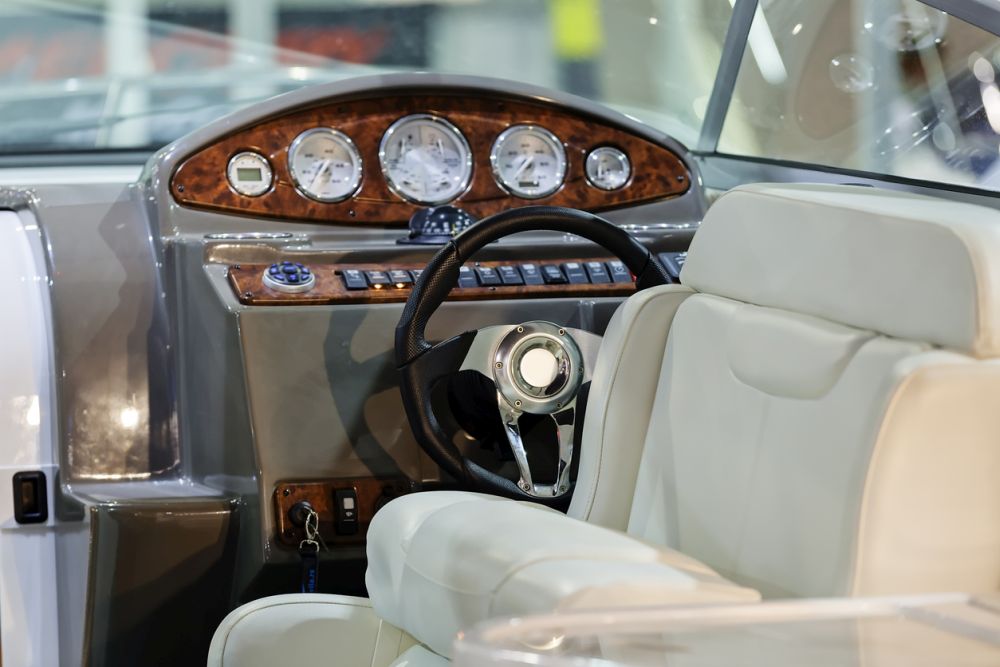
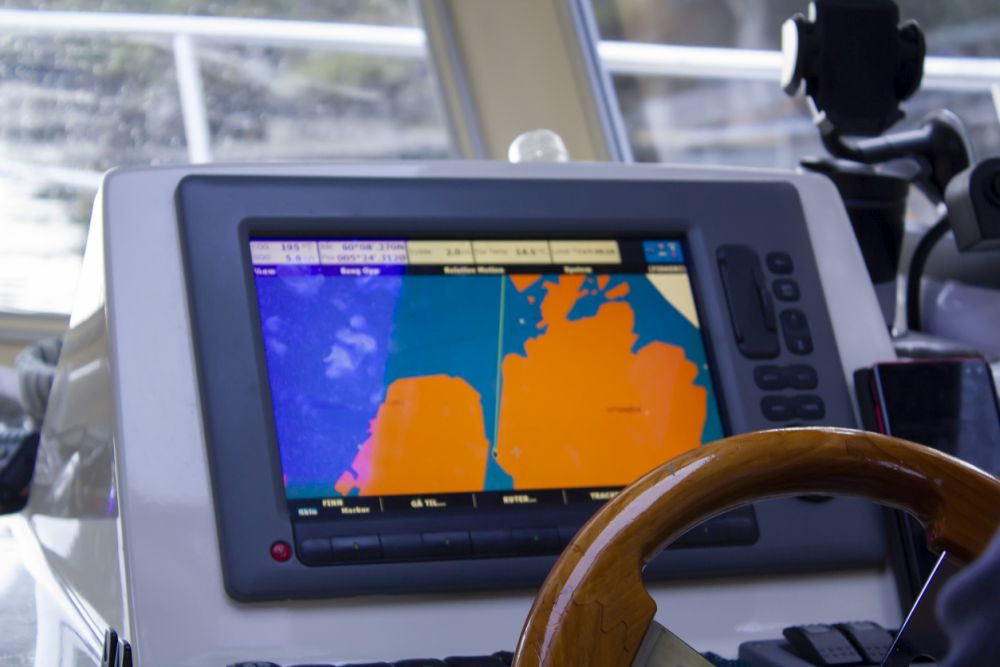
Modern boats often include sophisticated electronics that automatically calculate speed using satellite positioning, onboard sensors, or both. GPS chartplotters, multifunction displays, fish finders, and navigation systems make it easier than ever to monitor your movement in real time, but they may display speed using different units depending on regional settings or user preferences. Many systems allow boaters to switch between knots, miles per hour, and kilometers per hour with only a few menu selections. Understanding each unit helps when comparing information from multiple sources, such as navigation charts, weather forecasts, manufacturer specifications, and boating apps. It also reduces confusion if you rent or charter a boat equipped with unfamiliar settings. It's also worth remembering that GPS usually measures speed over ground, meaning your actual movement across the Earth's surface. Strong currents or tides may cause this reading to differ from your boat's speed through the water. Recognizing that difference helps explain why travel times sometimes vary even when your engine speed remains unchanged.
Common Boat Speed Conversion Mistakes to Avoid
Even experienced boaters occasionally misunderstand speed measurements, particularly when switching between different boats or navigating unfamiliar waterways. Fortunately, avoiding a few common mistakes can make trip planning much more accurate. One frequent error is assuming that knots and miles per hour are interchangeable. Although the numbers may appear similar at lower speeds, the difference becomes much more noticeable as speed increases. Another mistake is comparing manufacturer performance figures without checking which unit of measurement is being used. Boat reviews, engine specifications, and fuel economy tests may all report speeds differently. Boaters should also avoid relying entirely on speed readings without considering environmental conditions. Wind, waves, tides, river currents, and boat loading all influence how a vessel performs. Even if your GPS reports the same speed as yesterday, changing water conditions may require different handling techniques and longer stopping distances. Finally, remember that speed is only one part of safe navigation. Good situational awareness, proper lookout, knowledge of local regulations, and respect for no-wake zones remain just as important as understanding any conversion formula.
Why Boat Speed Matters for Safety and Fuel Efficiency
Understanding your boat's speed is about much more than knowing how fast you're traveling. Speed affects fuel consumption, stopping distance, passenger comfort, and your ability to respond safely to changing conditions on the water. Operating at the appropriate speed can make every trip safer while helping reduce unnecessary fuel costs. Many boats achieve their best fuel economy within a moderate cruising range rather than at full throttle. Traveling too quickly often increases fuel consumption dramatically without saving much travel time, especially over shorter distances. Reducing speed slightly in rough water can also improve stability and reduce strain on both the boat and its passengers. Local regulations should always influence your speed as well. Harbors, marinas, wildlife protection areas, and no-wake zones frequently enforce speed restrictions designed to protect other boaters, shoreline property, and marine ecosystems. Understanding your speed in knots, MPH, or KPH helps you comply with these rules while operating responsibly.
Tips for Estimating Boat Speed Without a Calculator
Although electronic navigation systems make speed calculations simple, there may be times when you want a quick estimate without reaching for a calculator. Learning a few easy shortcuts helps you interpret speed readings more confidently while keeping your attention on safe navigation. If you regularly work with different scientific or measurement units, a speed conversion calculator can also be a useful reference alongside other conversion tools for handling a variety of technical calculations. One helpful technique is remembering a few common benchmark conversions. For example, 10 knots is roughly 11.5 mph and 18.5 km/h, while 20 knots is approximately 23 mph and 37 km/h. Once these reference points become familiar, estimating nearby speeds becomes much easier through simple mental math. It's also useful to remember rounded conversion factors. Multiplying knots by 1.15 provides a close estimate in miles per hour, while multiplying by 1.85 converts them to kilometers per hour with sufficient accuracy for most recreational boating situations. Practicing these calculations before heading out on the water allows you to make faster decisions whenever speed comparisons become necessary.
Conclusion
Understanding knots, miles per hour, and kilometers per hour gives boaters far more than a simple math skill. It provides a practical foundation for safer navigation and better decision-making on the water. Because many boat manufacturers rely on different speed units, knowing how to convert between them helps you interpret information quickly and confidently. Whether you're taking a fishing boat across a quiet lake, sailing along the coast, or planning a longer voyage, understanding boat speed measurements improves your skills as a mariner. Combined with modern GPS systems, accurate weather information, and safe boating practices, these simple conversions help ensure every trip is more efficient, more enjoyable, and better prepared for changing conditions on the water.